Big-Hearted Families™ Blog
Subscribe today to receive new posts right in your inbox!
Connect with DGT’s newest tools, discover emerging research, and enjoy concrete inspiration to put Doing Good Together's mission in action.
Our Most Recent Blog Posts
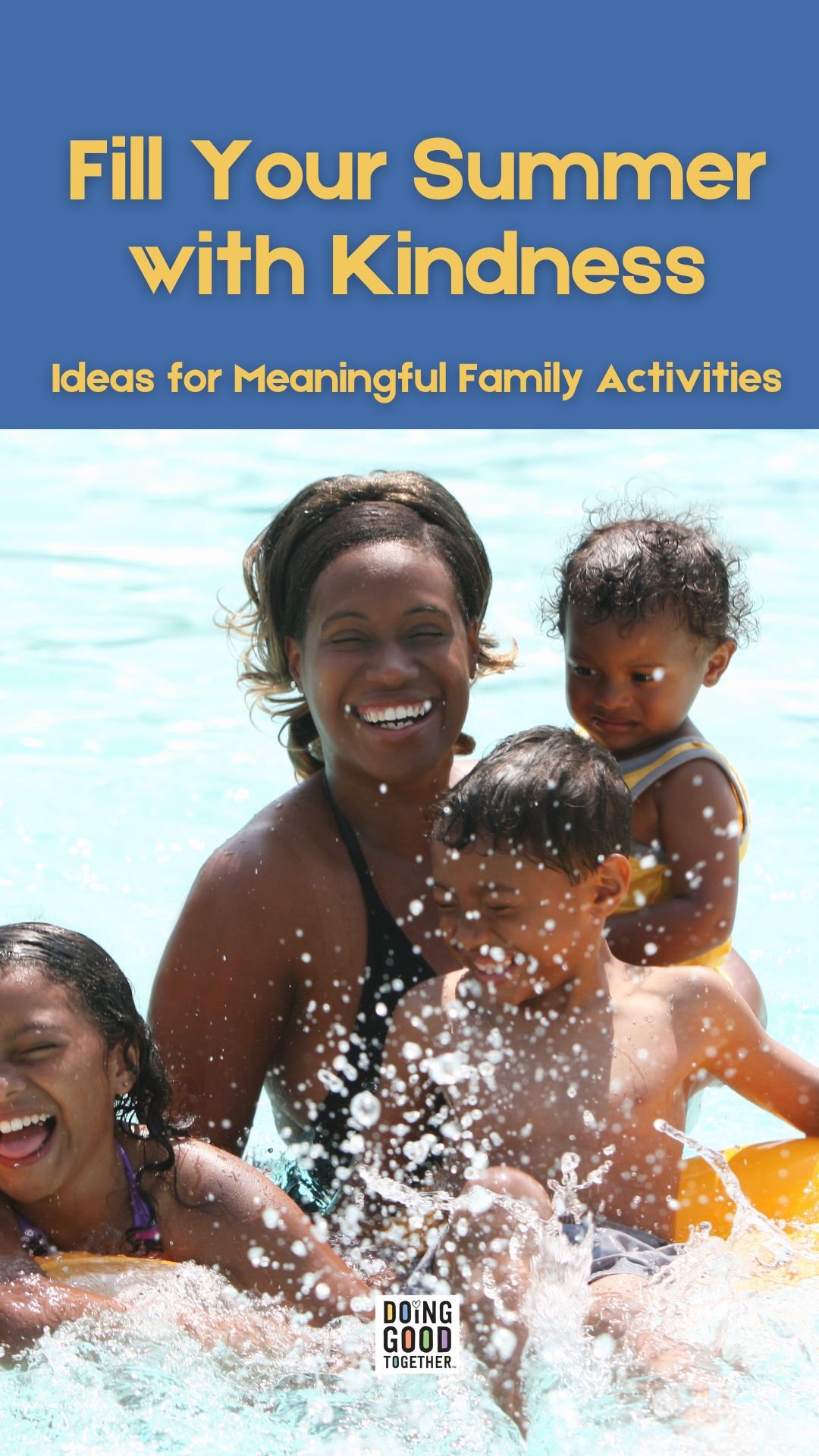
As you are mapping out your summer bucket list, Doing Good Together is here to help with ideas for meaningful kindness.
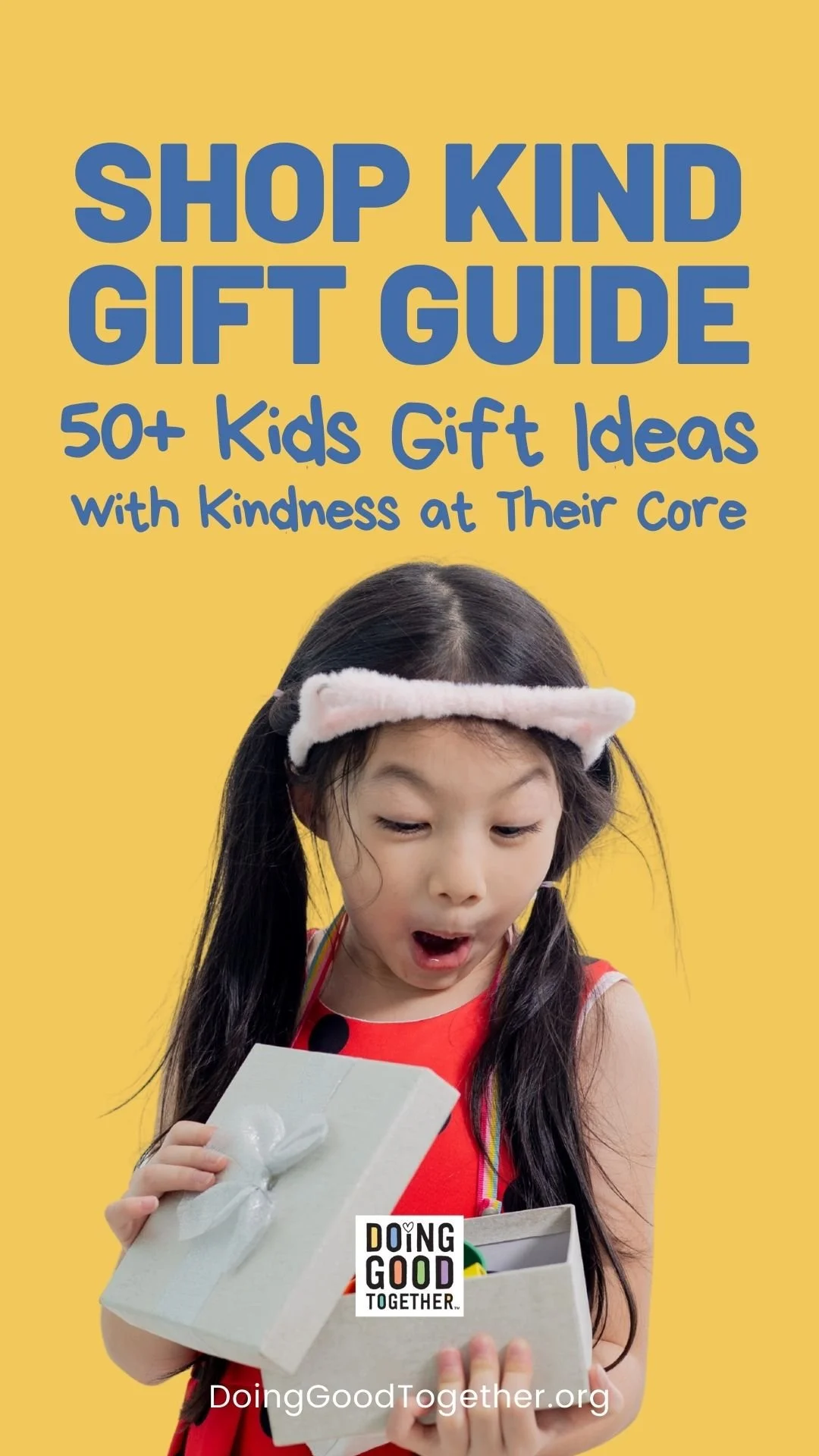
50+ kids’ gift ideas with kindness at their core! Gift giving opportunities pop up throughout the year, from annual holiday, birthday, and anniversary celebrations, to one-time milestone moments like graduations, major accomplishments, or just because. With the overabundance of consumerism in our culture, it’s natural for parents who care about the world to want to be mindful of what they're purchasing, not wanting junk to accumulate in their homes. That’s why we assembled this tried-and-true gift guide of favorite presents with kindness at their core. You’ll find special projects and tools that keep kids busy, encourage reflection, and encourage conversations; activities, items, and games that help them explore and understand the world around them; apparel that supports good causes, and more.
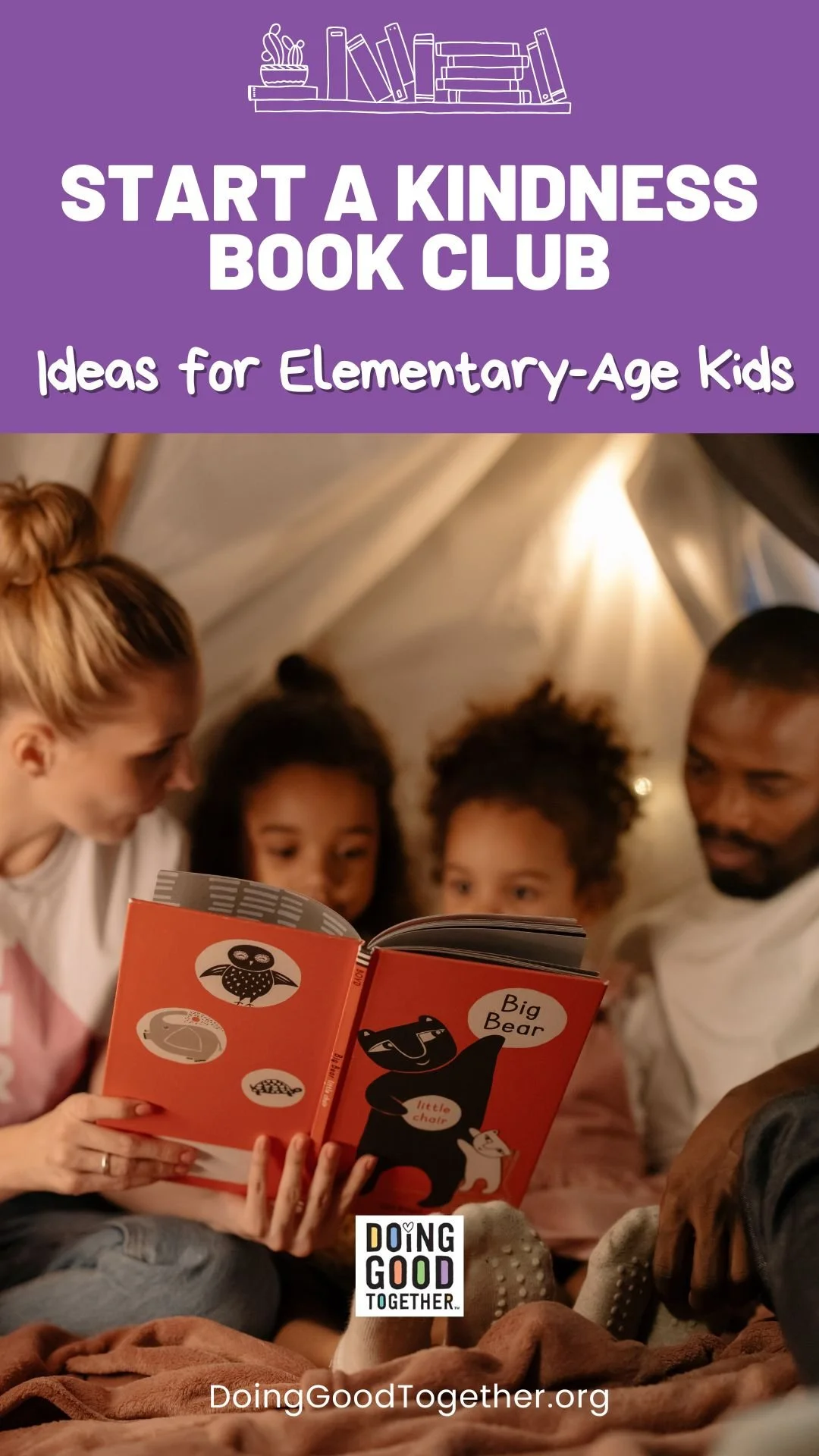
Everything is better with friends and a party!
How about friends and a party and an amazing book? As a parent, September feels like a fresh start, a new year. It’s full of opportunity as the school year gears up along with a new season of activities and sports. I’m going to suggest one more thing to start this year - a big-hearted book party club!

Learn ways to include kindness lessons in educational settings and beyond! Through learning about kindness, children learn empathy and compassion and can begin viewing the world around them through the eyes of others as they appreciate diverse perspectives. By building kindness activities into regular educational practices, we prepare kids for life as an adult who cares and contributes to the world around them. If action speaks louder than words in early childhood, why not get their bodies, minds, and hearts involved in caring for their communities?

Learn ways to include kindness lessons in educational settings and beyond! Through learning about kindness, children learn empathy and compassion and can begin viewing the world around them through the eyes of others as they appreciate diverse perspectives. By building kindness activities into regular educational practices, we prepare kids for life as an adult who cares and contributes to the world around them.

Valentine’s Day often stirs strong feelings, often over-celebrated with material gestures. Our guest contributor shares how her view of the holiday was shifted by a homemade card, revealing the day's deeper potential. Learn how teaching young children about varied forms of love can foster empathy and enrich lives.

We might apply the idea of a “messy middle” to much of life–switching careers, engaging in social change, even parenting/family life itself. Most of our lives happen in this space, when you stop to think about it–we haven’t yet “arrived” at the metaphorical place of organization and tranquility, but are constantly evolving our processes to be responsive to needs. How might we help our children understand the messy middle–its necessity, its tension, its gift–in a developmentally-appropriate way?

As parents and caregivers, you likely know all too well the daily stressors you face. The surgeon general’s report outlines the specific challenges we face at each stage of a child’s development, from sleepless nights with newborns to navigating the troubled teen years. The stress doesn’t just affect us as parents, it spreads to impact the whole family unit. And when we worry that our stress is affecting our kids, the cycle feels never-ending. The surgeon general’s report calls attention to this vicious cycle and offers actionable ways to break it.

In today's fast-paced information cycle, issues are often presented as black or white, right or wrong. When parents actively listen and support diverse perspectives on various topics, from child care to nutrition, they model for children how to understand and appreciate differences, encouraging a more nuanced and empathetic view of the world.

Mental health experts recommend helping young people build an understanding over time of what they can and can’t control. Bringing the focus to “how we treat other people; what activities we do the next day; what goals we have; who we spend time with; how hard we try to do the best we can” is something we can start in middle childhood to build a strong frame of reference in adolescence.

Buckling up for a metaphorical bumpy ride from time to time as you enter a new job, experience a change in leadership, or encounter a developmental growth spurt is something that begins at birth and follows us until life’s conclusion. The winds of change blow strong. With children, we sometimes don’t see the changes themselves right away; instead, we see the impact of the changes in personal barometers of behavior and mood. How can we as supportive humans respond effectively to the need for change and see the purpose behind the disequilibrium?

People want and need to be seen. It is a fundamental characteristic of humans that we seek opportunities to connect with others in an authentic way. We want to feel noticed and valued as a member of the human community. We want to understand AND be understood. This connection is vital to our feelings of safety and happiness, and ultimately is foundational to our ability to work through challenges, think critically, be planful, and other executive function skills. How can adults use that in-born inclination to shine a light on actions that we wish to reinforce in our children?

As adults, we have a better sense of what is within our locus of control and how we can approach solving problems from our mature perspective, whereas young children see a lot of problems as big and insurmountable even if they are not. The good news is that we can cultivate the growth of our child’s sense of helpfulness over time in ways that match their developmental stage, while teaching about both agency AND the interconnectedness of humanity.

in the last few years, I have worked diligently to cultivate a growth mindset and to model that approach for my teenage children. The basic idea behind this concept is that by using “yet” at the end of a sentence, we reframe our approach to problems and retrain our brains to see challenges as opportunities to learn and grow.
Jump into spring with these big-hearted posts!

We’ve gathered a dynamic list of our favorite digital reinforcements, chosen for their masterful ability to help you solve your latest parenting dilemma. Rely on these sites to make the rough patches of parenthood a little smoother, and free up some time to build your real-world network of support.

There is a certain amount of “Who am I?” and “Why are we here?” work that needs to happen during our early years. At Doing Good Together, we have found that a great deal of the inner work happens when kids have the opportunity to ask big questions with adults in their lives. Our latest post gives you the scientific benefits of philosophical inquiry and offers practical tools to get you started.
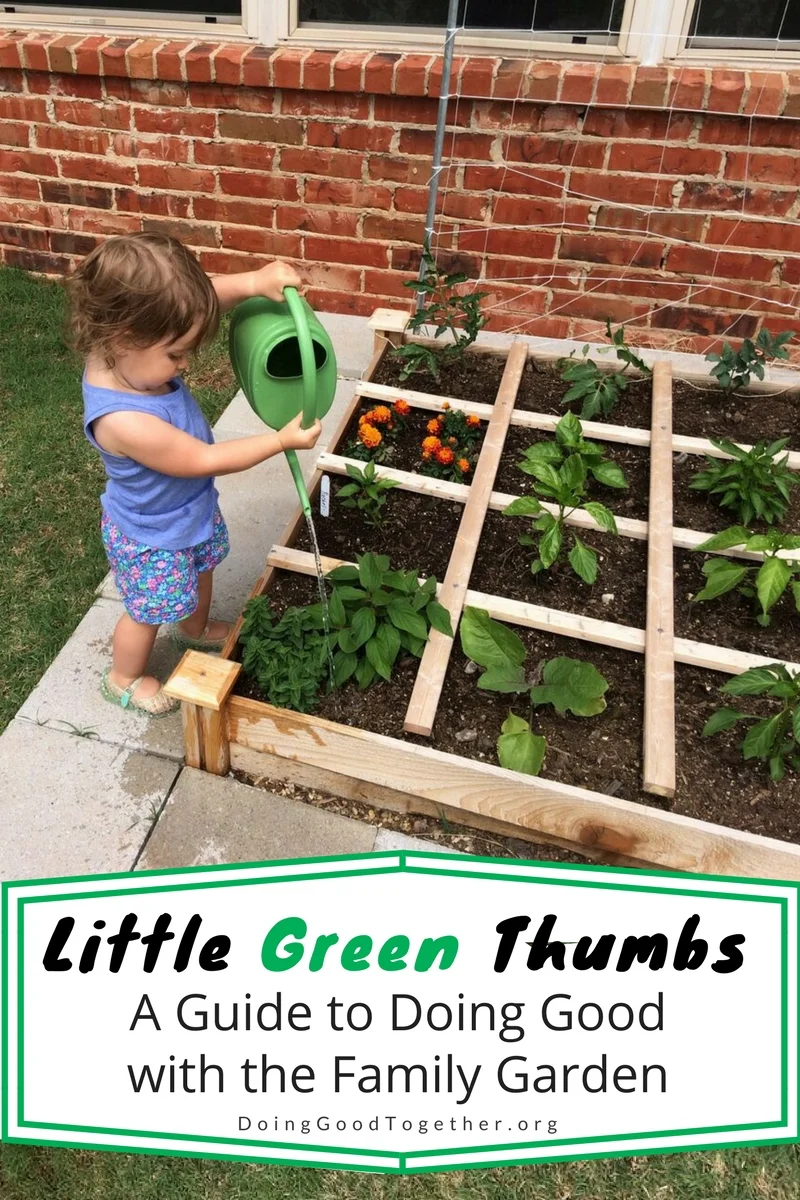
At Doing Good Together™ we love to find ways to make a difference, not occasionally, but regularly, as part of the hobbies and habits we already pursue. Here are four easy ways you and your little one can make a difference with this summer's family vegetable garden and three essential reasons to make gardening your favorite family hobby!
For nearly fifteen years Doing Good Together has connected parents with essential tools to open a thoughtful dialogue with their kids. We've seen time and again that by reflecting on our experiences, volunteer efforts, and everyday interactions, children develop strong skills in compassion and problem-solving.
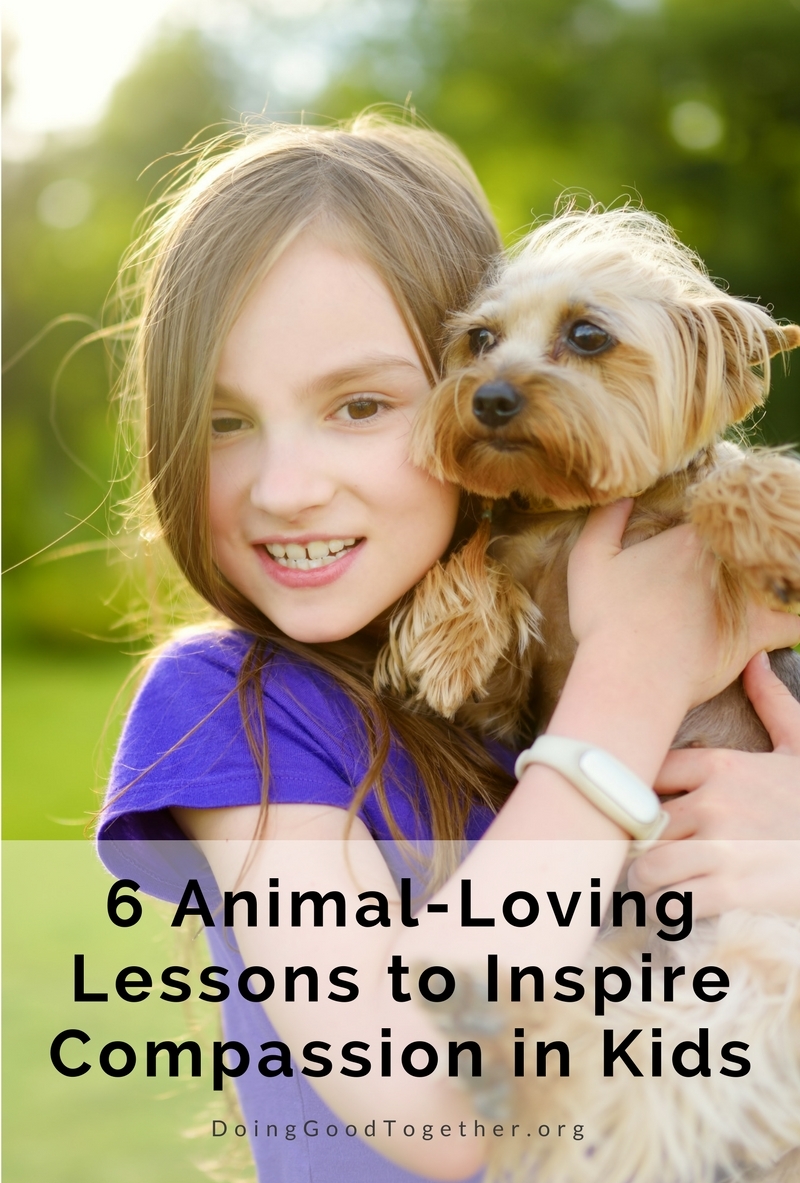
While not every family is destined for pet ownership, every family can harness the power of creature-love to inspire compassion and encourage a bond with the animal kingdom. We've gathered our favorite resources to get you started.

Here at Doing Good Together, we'd like to suggest one small addition to your family adventure: plan for a few intentional acts of road trip kindness.Let's teach our children that our essential values of compassion and empathy don't take a vacation. Acts of kindness are a natural part of daily life, even on the road.

Send children's art to Color-a-Smile instead of the recycle bin! This wonderful, nonprofit organization accepts all standard-sized kids drawings and sends them on to nursing homes, meals-on-wheels recipients, hospitals, and other individuals in need of a smile.

I’ve been working with Doing Good Together for a long time, long enough to know how important it is to grow strong roots of kindness and courage before that first day of school. Habits of kindness will help forge new friendships. Regular volunteering gives kids a strong sense of empowerment, as they see themselves as helpers. This self-reliance translates to courage in the classroom, as well as on the playground.

Music helps us rally and brings us together in a way few other mediums can. In spite all of its power, music has been absent from Doing Good Together's big-hearted offerings. Until now.Here are 5 projects for big-hearted music lovers.

Did you know our big-hearted toolsare perfect for grandparents and grandchildren? Doing good with grandchildren makes lasting memories and builds close bonds as family members work together on issues they care about.
Enjoy our NEW printable summer bucket list, along with several tips to make the most of your family's free time this summer.
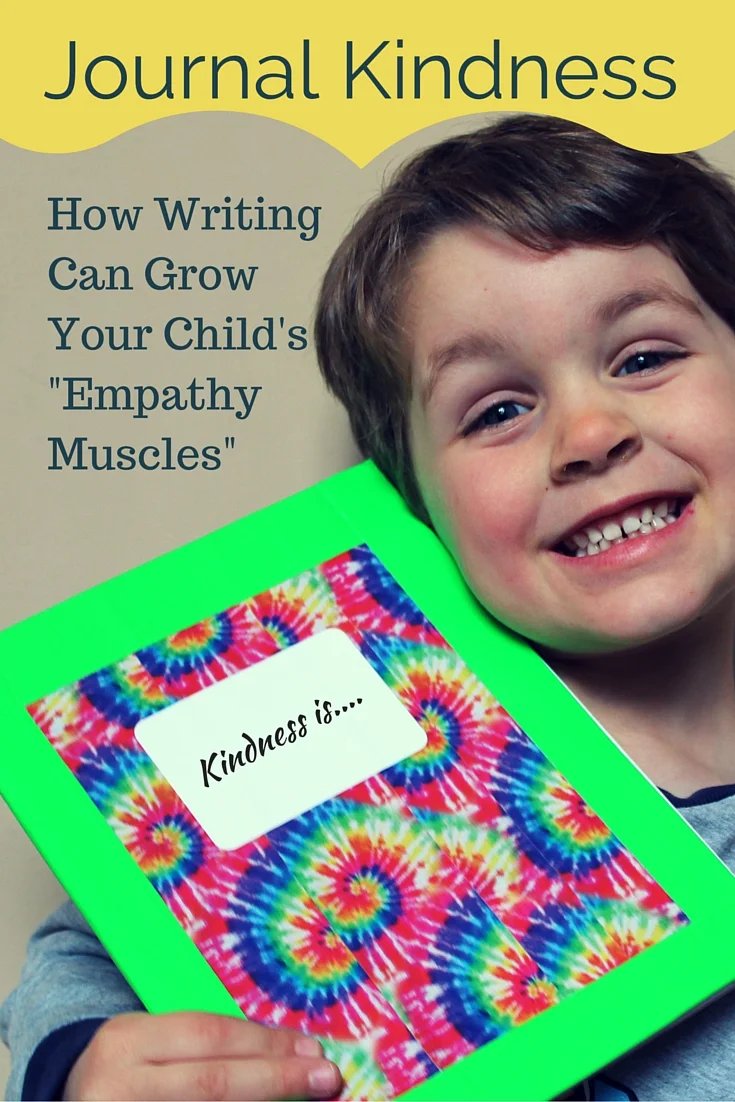
Take your kindness practice deeper by setting aside a few moments each week to discuss and write about the prompts we've gathered.

Give your child loving, fun experiences sharing kindness, and you'll teach most important lesson of all: Kindness isn't an act, it's a lifestyle.

Without the limitations of you might get dirty and I don’t want to have to clean that up later, kids with an hour or two of unscheduled time on their hands can get remarkably creative.
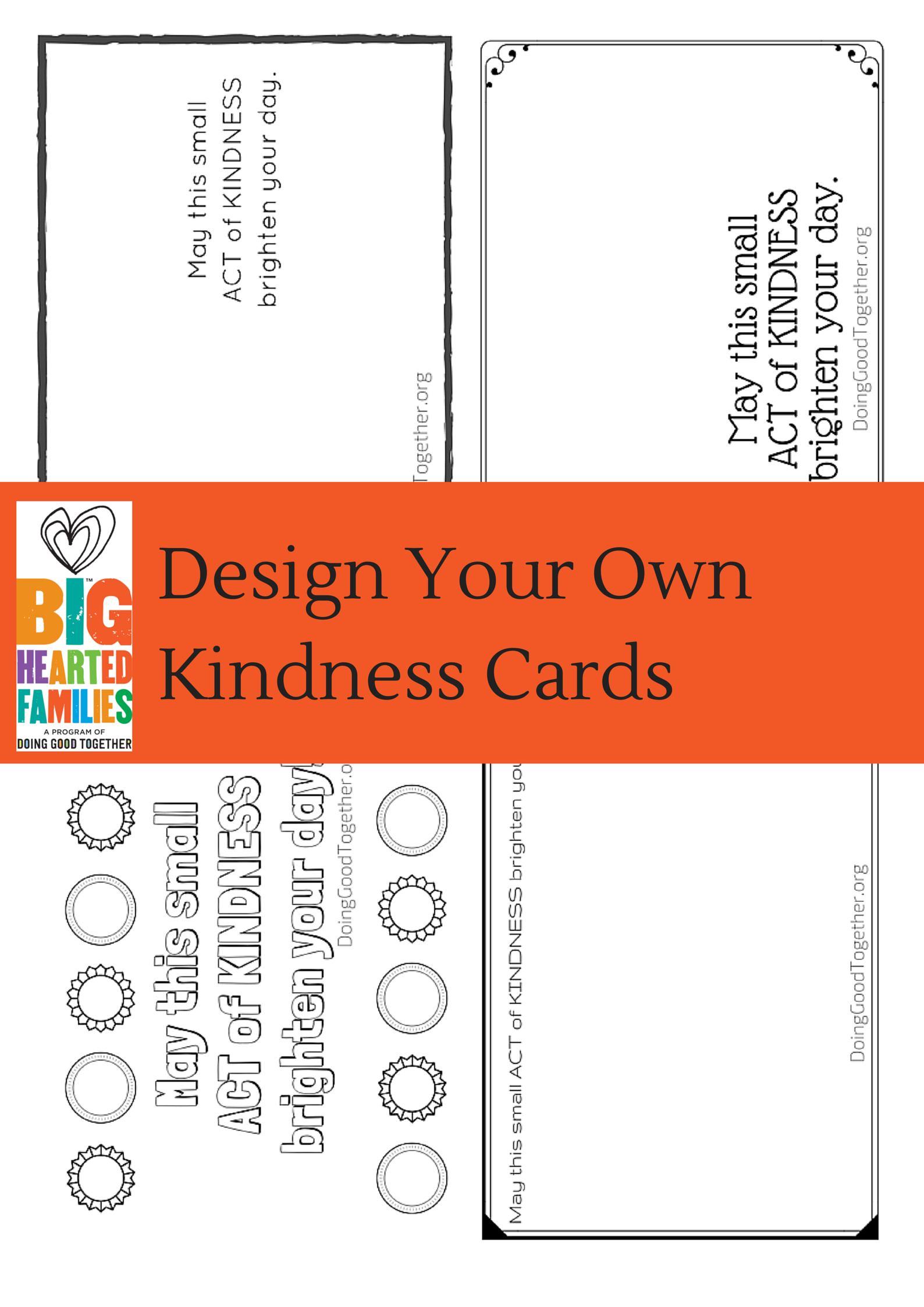
Don't let the summer of kindness get away from you! Print these nifty new DIY labels and go on a random acts of kindness quest.
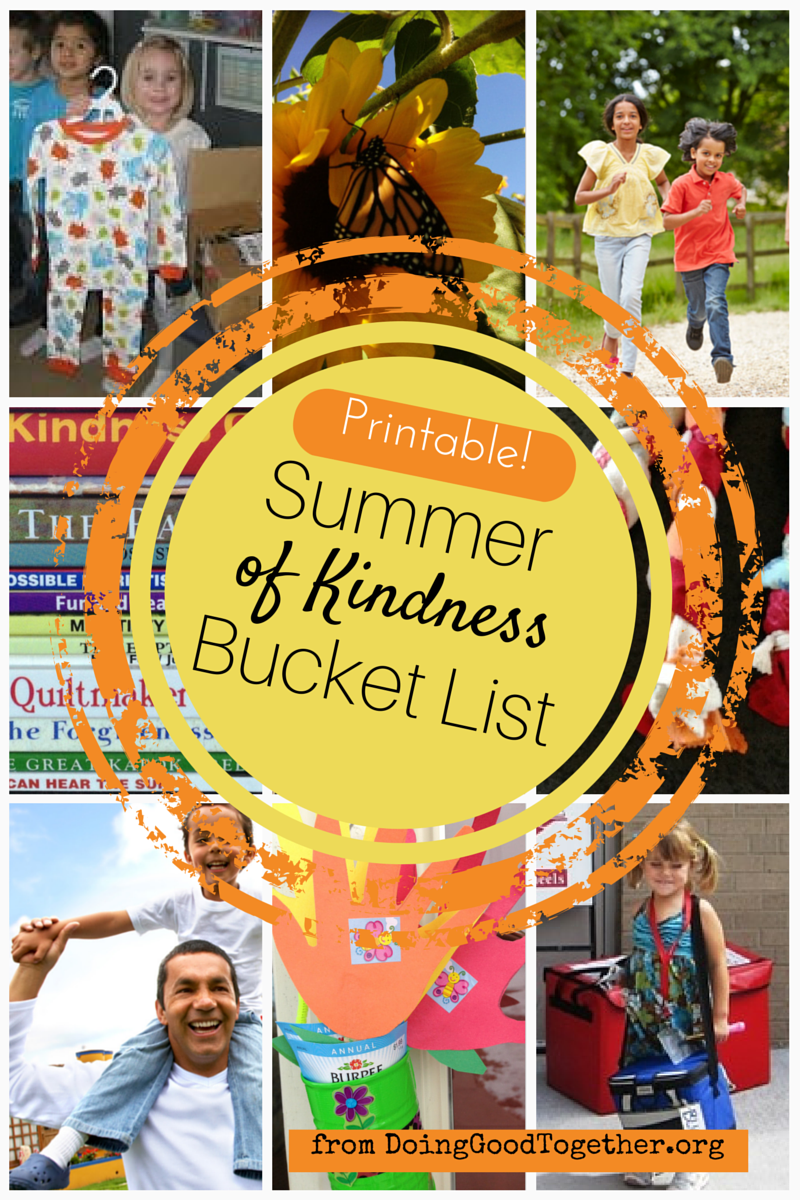
Last week we shared ourSummer of Kindness Bucket List over on My Little Poppies . Now we’ve added a printable checklist, along with a few extra ideas thanks to input from our Membership Circle.

Reading about someone else's experiences, especially when the person is someone you treasure, builds a sense of empathy and a deeper understanding of that person as an individual.
A couple of years ago, we instituted a family Mail Center. Now we put all of the kids' crafty productivity to good use, spreading cheer and love and the occasional envelope-sized goody.
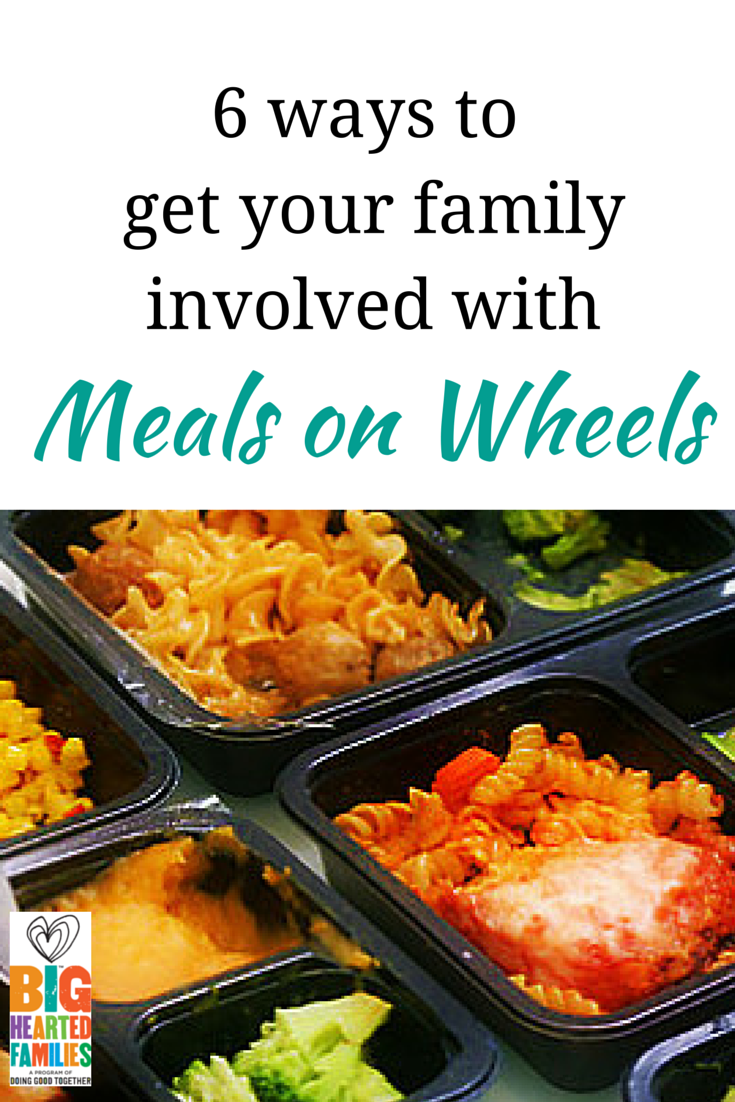
Meals on Wheels does amazing work, keeping seniors - safely - in their homes longer and addressing the growing problem of hunger among older Americans. And my personal favorite aspect of Meals on Wheels? You'll be helping out your immediate community, making the effort very tangible and knowable for kids of any age.

A brief dip into Pinterest will reveal dozens of amazing summer bucket lists. Print your favorite and stick it on the fridge to enliven dull moments. Even better, print our Big-Hearted Boredom Busters and keep a menu of simple kindness ideas at the ready.
Our Most Popular Blog Posts
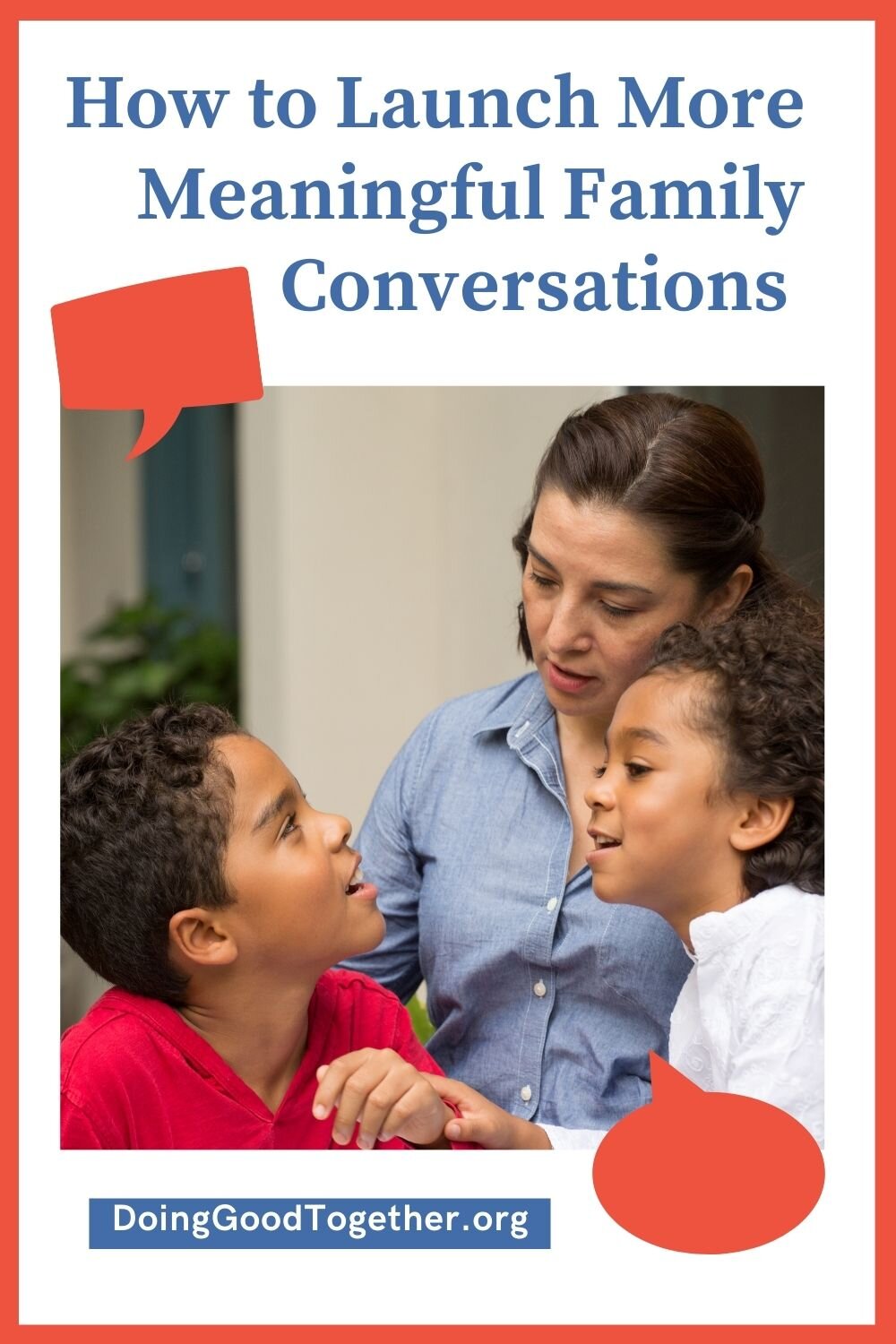
Talking intentionally and openly about big ideas is at the core of DGT™’s mission and has had the greatest impact on our family’s life. Now updated with questions designed for reflection during the COVID-19 Coronavirus pandemic.
There is a certain amount of “Who am I?” and “Why are we here?” work that needs to happen during our early years. At Doing Good Together, we have found that a great deal of the inner work happens when kids have the opportunity to ask big questions with adults in their lives. Our latest post gives you the scientific benefits of philosophical inquiry and offers practical tools to get you started.
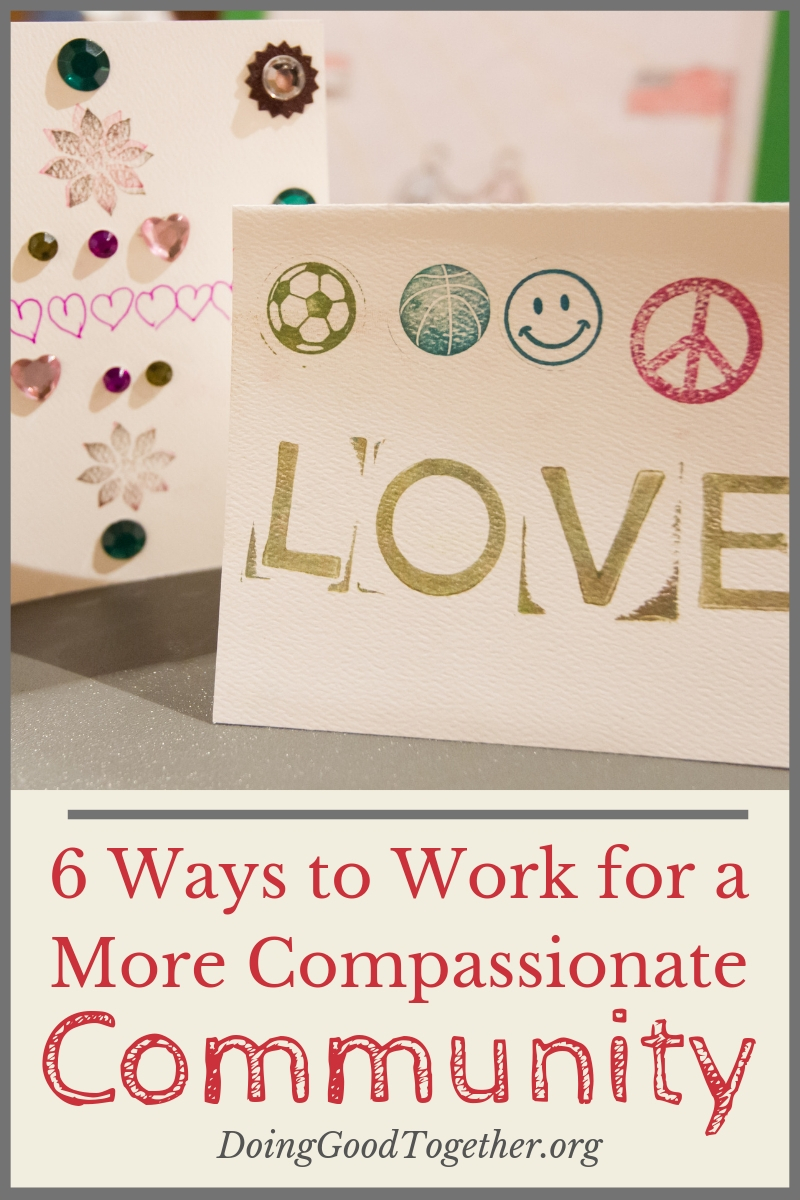
In his rendition of Stone Soup, Jon J Muth offers a lovely example of the way individual generosity can lead to a more compassionate community. Building on this inspiration, Doing Good Together offers several practical suggestions to help your family enrich your community in simple, everyday ways.

Giving your family routine a few big-hearted upgrades can make it easier to raise thoughtful, kind kids willing to reach out to that new student sitting alone at lunch or brave enough to stand with the student getting taunted by a bully. Ultimately these kind routines will help children become adults who strive to make a difference in the world.

To create peace in the world, we must strive for peace among our own neighbors, peace within our homes, and peace in our own hearts. Here, we share three everyday strategies to raise peacemakers.

In this age of divisiveness, disturbing headlines, and excessive devices, strong communication skills are more important than ever. Let's make time to practice these skills as a family. Here we offer 7 skills your family can begin practicing right now.
I’ve been working with Doing Good Together for a long time, long enough to know how important it is to grow strong roots of kindness and courage before that first day of school. Habits of kindness will help forge new friendships. Regular volunteering gives kids a strong sense of empowerment, as they see themselves as helpers. This self-reliance translates to courage in the classroom, as well as on the playground.
Sharing compassion with others meets critical needs in our communities, even as it heals our spirits. With each act of service, our families can be a force for love and kindness, helping to heal our fractured country and connect meaningfully with those around us.
And along the way, our children will discover what it means to live an engaged and compassionate life.
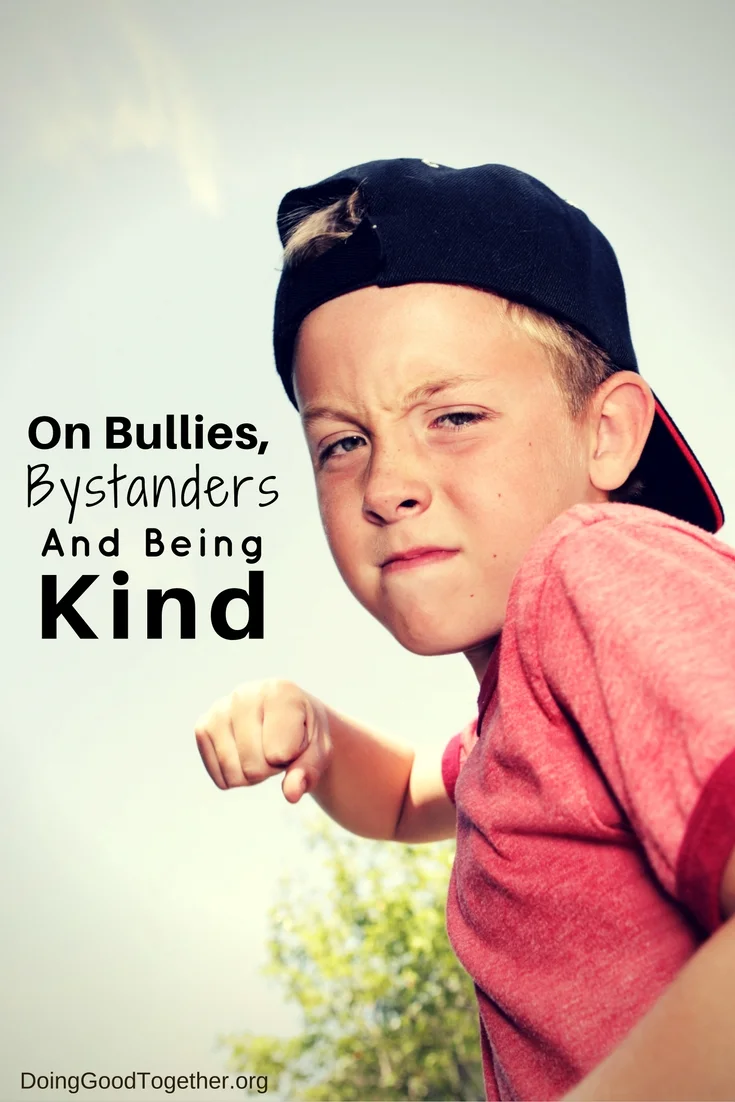
Kids – and adults too – face difficult situations more boldly if they've thought through their responses ahead of time. To this end we've compiled the list below to get your family started.

Finding our tribe is good for our health. It's good for our jobs. It helps us live longer. But do our tribes limit our social experiences? We need to intentionally throw open the gates to new friendships and new social experiences if we’re going to expand our cultural boundaries and unlearn the prejudice that's unraveling our country.
For many parents, the hardest part of family life isn’t just everything we do. It’s everything we have to remember. The invisible load—the constant mental tracking, planning, anticipating, and organizing that keeps family life moving—can be exhausting.